
Removing the water you can see is the first half of the job. Structural drying removes the water that soaked into subfloor, framing, insulation and drywall, and it is verified with meter readings rather than by how dry the floor looks.
How long does structural drying take and how does it work?
Structural drying starts immediately with air movement, dehumidification, water removal, and monitoring—not with a fixed promise of days. EPA and MDH set the key response window at 24–48 hours: dry wet areas and items in that period to reduce mold risk. A wall or ceiling surface can feel dry while its cavity, insulation, or backing remains wet, so the work continues until the affected assembly is checked, not merely until the room looks dry. EPA mold and moisture guide · MDH mold-and-moisture brochure
Best answer: dry the assembly, not just the visible surface
Situations covered
- Clean-water leaks found quickly.
- Wet wall, ceiling, floor, or insulation assemblies.
- 55303 historic-core plaster over lath and newer 55304 drywall construction.
What happens next
- Stop the water source and make the area electrically safe before work begins. CDC electrical-safety guidance
- Remove standing water and use fans plus dehumidification to lower moisture. MDH mold-and-moisture brochure
- Check whether water is limited to the surface or has entered cavities and insulation.
- Reassess wet materials during drying; remove porous materials when they cannot be dried or contamination changes the decision. EPA water-damage table
Decide how far drying needs to go
| Condition | First priority | Likely next step |
|---|---|---|
| Water is still present | Remove it safely | Begin air movement and dehumidification. MDH mold-and-moisture brochure |
| Surface looks dry but cavity may be wet | Check the assembly, not just the finish | Continue monitoring before closing or repainting. |
| 55303 plaster over lath is damp | Determine how far moisture traveled behind the finish | Dry and evaluate the plaster, lath, and cavity together. |
| Newer 55304 drywall is wet | Check the drywall edge and insulation cavity | Use the EPA material guidance to decide drying versus removal. EPA water-damage table |
| Materials stayed wet beyond 48 hours or mold is visible | Shift from simple clean-water response to mold-aware cleanup | Completely dry, clean up mold, and correct the moisture source. EPA disaster mold guide |
First actions for structural drying
- Stop the leak or intrusion and do not enter water around outlets, cords, or wet electrical equipment. CDC electrical-safety guidance
- Call 911 for immediate danger, including fire, suspected gas leak, or water that may be electrically charged. CDC reentry guidance
- Remove standing water and use fans and dehumidifiers as soon as it is safe. MDH mold-and-moisture brochure
- Begin the drying response within 24–48 hours; that is the documented mold-prevention window, not a guaranteed total drying duration. EPA mold and moisture guide
- Monitor humidity and moisture rather than judging progress by appearance alone; EPA advises keeping indoor humidity below 60%, ideally 30–50%. EPA mold and moisture guide
- Open or remove materials when needed to reach wet insulation or a wet cavity, especially where porous materials cannot be dried within the response window. EPA water-damage table
What is structural drying?
Structural drying is the process of removing moisture from the building materials that make up a room, not only from the water visible on the floor. It relies on water removal, air movement, dehumidification, and repeated monitoring so concealed wet material is addressed before it supports mold growth. MDH mold-and-moisture brochure · EPA mold and moisture guide
Why can a wall feel dry while the assembly is still wet?
The painted face is only one part of an assembly. Water can move into a drywall or plaster backing, the lath in a historic 55303 wall, or insulation behind a newer 55304 drywall finish; a surface check alone therefore cannot show whether every component is dry. EPA material guidance separates drywall and insulation because each needs its own drying-or-removal decision. EPA water-damage table
Common questions about structural drying
How long does structural drying take?
There is no single source-grounded number of days for every building or water event. The reliable range is the response window: EPA and MDH advise drying wet areas and materials within 24–48 hours to reduce mold risk. Actual duration depends on what got wet, how far water entered cavities, and whether materials can be monitored and dried rather than removed. EPA mold and moisture guide · MDH mold-and-moisture brochure
Do fans alone dry a wet basement or wall?
Fans are part of the response, but MDH identifies both fans and dehumidifiers for drying wet materials. Air movement helps move moisture, while dehumidification helps control the humidity that can slow drying. Use them after water removal and monitor the affected materials rather than treating a fan as proof the assembly is dry. MDH mold-and-moisture brochure · EPA mold and moisture guide
Why does the 24–48 hour window matter?
EPA says it is important to dry water-damaged areas and items within 24–48 hours to prevent mold growth, and MDH gives the same drying window. If a flood-damaged home could not be dried in that time, EPA advises assuming mold growth has occurred and completely drying everything, cleaning the mold, and fixing the moisture problem. EPA mold and moisture guide · EPA disaster mold guide
Does historic plaster over lath dry like modern drywall?
No single rule fits both assemblies. In the 55303 historic core, plaster over lath has multiple layers and a cavity to evaluate; newer 55304 work commonly uses drywall and may also have insulation behind it. The practical question is whether each affected layer can be reached, monitored, and dried before mold risk rises. EPA water-damage table
Should insulation be included in the drying check?
Yes. EPA’s clean-water response table treats insulation as a separate material because it can hold water behind a finished wall or ceiling. If water reached insulation, assess the cavity rather than stopping when the room-facing surface feels dry. For flood or sewage water, wet porous materials should be removed and discarded rather than dried in place. EPA water-damage table · Minnesota water-intrusion guidance
What humidity should I aim for while drying?
EPA advises keeping indoor humidity below 60% relative humidity, ideally between 30% and 50%, to reduce condensation and mold risk. A humidity or moisture meter can help document conditions, but low room humidity does not replace checking materials that were exposed to water. EPA mold and moisture guide
Related help: remove standing water, evaluate wet drywall, address a wet ceiling, and understand mitigation and restoration.
Sources: EPA mold and moisture guide; MDH mold-and-moisture brochure; EPA water-damage table; EPA disaster mold guide; Minnesota water-intrusion guidance; CDC electrical-safety guidance.
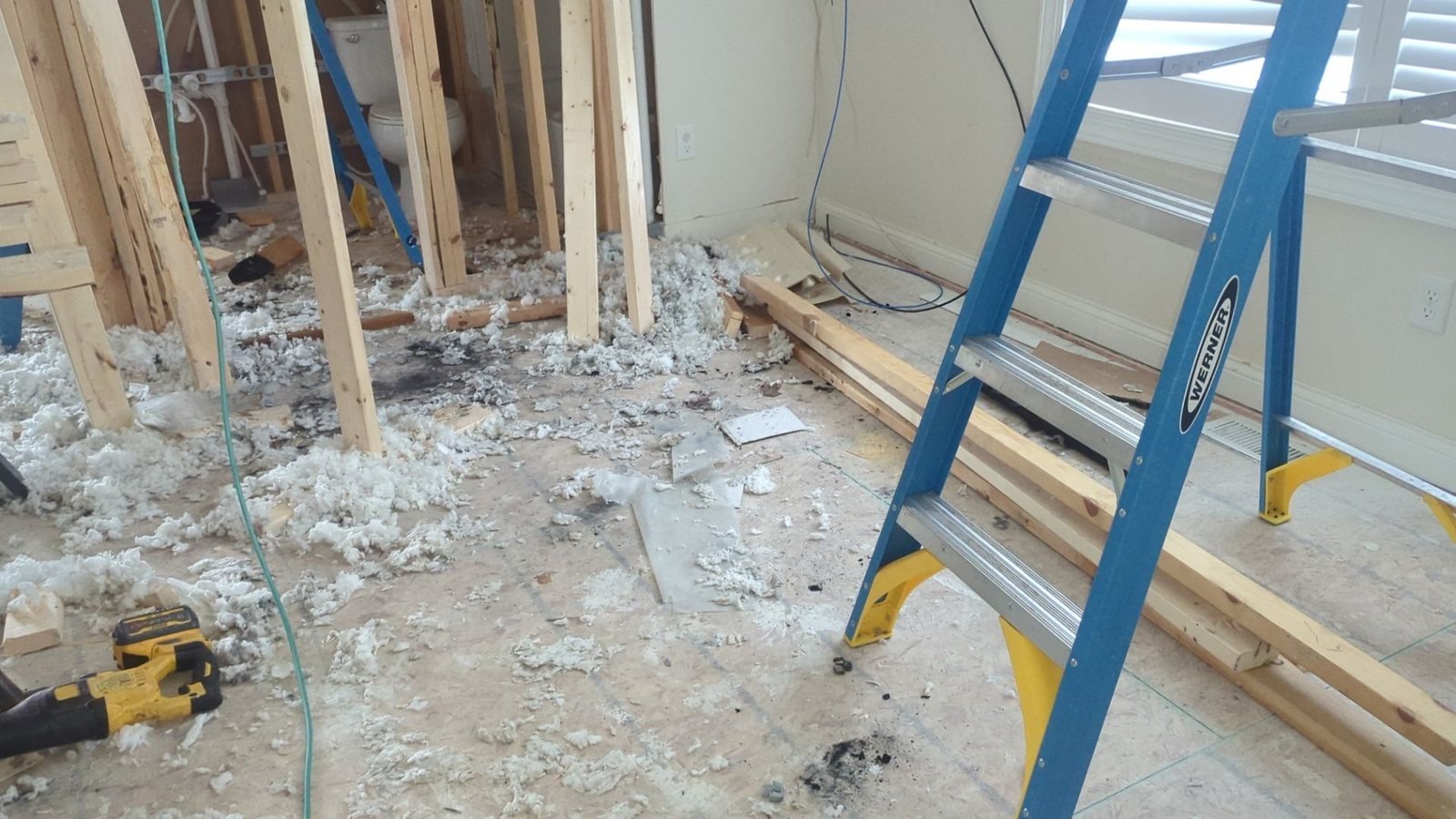
Why extraction alone is not enough
Building materials absorb water and then release it slowly back into the air. A basement slab can look dry while the bottom plate above it, the batt insulation beside it and the drywall on top of it are still saturated. Left alone, that trapped moisture is what produces odour, delamination, cupped flooring and microbial growth.
Air movers
High-velocity airflow across wet surfaces speeds evaporation from materials into the air.
Dehumidification
Refrigerant or desiccant units pull that moisture out of the air so evaporation can continue.
Containment
Drying a controlled volume works; drying an open house wastes equipment and days.
Monitoring
Daily moisture and humidity readings show whether the plan is working or needs changing.
How dry is dry
Drying is finished when affected materials read the same as comparable unaffected materials in the same building — the dry standard — not on a fixed schedule. Typical residential drying runs several days, and heavy materials such as plaster, concrete and hardwood take longer than drywall.
The daily log matters beyond the job itself: it is the documentation an adjuster uses to evaluate the claim, and it is the record that the structure was dry before anything was closed back up. Materials that will not reach dry standard get removed instead — see water damaged drywall.
Why containment and equipment count matter
Drying works on a closed volume. Left open to the rest of the house, dehumidifiers spend their capacity on air that was never wet, and the affected assembly dries slowly or stalls. Containment with sheeting concentrates the work where it belongs and cuts the number of equipment days on the invoice. Equipment count follows the same logic: air movers are placed by affected surface area and angle, and dehumidification is sized to the volume being dried, not to a fixed number per room. Too little equipment leaves moisture behind; too much adds cost without shortening the schedule. Both decisions come from the initial readings.
Drying plaster walls versus drywall
Plaster and drywall are dried on different schedules. Plaster over lath, common in the historic 55303 core around Main Street, is dense and absorbs a large volume of water. It usually survives a clean-water event that would destroy drywall, but it gives that water up slowly, so equipment stays longer and readings are taken at more points, including into the lath and the framing behind it. Aggressive heat is avoided because it can craze the finish and separate plaster from lath.
Drywall in newer north-Anoka construction dries faster and fails sooner. A panel that stayed wet long enough to soften or swell is removed rather than dried. The wall cavity behind either material is the real target: bottom plate, studs and insulation are what carry moisture forward if they are closed up wet.
Asked and answered
Direct answersWhat is structural drying and why is it necessary?
Structural drying removes the water that soaked into subfloor, framing, insulation and drywall after the standing water is gone. Materials release moisture slowly back into the air, and trapped moisture is what produces odour, cupped flooring, delamination and microbial growth. Extraction stops the loss; drying is what makes the structure sound again.
How long does structural drying take?
Typical residential drying runs several days. It is finished when affected materials read the same as comparable unaffected materials in the same building — the dry standard — not on a fixed schedule. Dense materials such as plaster, concrete and hardwood take longer than drywall.
How do you prove the structure is dry?
Moisture content and relative humidity are logged daily at the same points, alongside equipment placement and ambient conditions. That log demonstrates the drying goal was met and is the documentation an insurance adjuster reviews when evaluating equipment days on the invoice.