
Wet drywall sometimes dries in place and sometimes has to come out. The deciding factors are how contaminated the water was, how long the panel stayed wet, whether it lost structural integrity, and what is in the cavity behind it.
Can wet drywall be dried, or does it have to be removed?
Wet drywall can sometimes be dried after a clean-water leak found quickly, but floodwater or sewage changes the decision: wet porous materials should be removed and discarded rather than dried in place. The wall cavity matters too. If insulation is wet behind the drywall, the surface cannot tell the whole story. Begin the clean-water drying response within 24–48 hours; if materials remain wet longer or mold appears, use a different cleanup approach. EPA water-damage table · Minnesota water-intrusion guidance
Best answer: identify the water and check behind the wall
Situations covered
- Clean water from a supply line, appliance, rain, or melting snow.
- Floodwater or sewage reaching drywall, baseboards, or insulation.
- A wall that appears dry but may hold wet insulation in the cavity.
What happens next
- Stop the water source and make electrical conditions safe before touching a wet wall. CDC electrical-safety guidance
- Determine whether the water was clean or contaminated; flood and sewage water require removal of wet porous materials. Minnesota water-intrusion guidance
- Check the drywall edge and cavity for wet insulation, then decide whether drying access is possible.
- Dry clean-water damage within 24–48 hours or remove material that cannot be dried. EPA water-damage table
Decide whether drywall stays or goes
| Condition | First priority | Likely next step |
|---|---|---|
| Clean water, found quickly | Start water removal and drying | Follow EPA material guidance within the 24–48 hour response window. EPA water-damage table |
| Floodwater or sewage touches drywall | Treat the wall as contaminated | Remove and discard wet porous material. Minnesota water-intrusion guidance |
| Insulation is wet in the cavity | Assess beyond the wall surface | Open enough to evaluate and address the insulation. EPA water-damage table |
| Drywall has been wet longer than 48 hours | Look for mold and trapped moisture | Use a different remediation approach, not simple rapid drying. EPA water-damage table |
| Outlets or electrical equipment are wet | Keep out of the area until safe | Do not work from standing water or touch energized equipment. CDC electrical-safety guidance |
First actions for wet drywall
- Stop the water source and keep clear of any wet outlets, cords, or electrical equipment. CDC electrical-safety guidance
- Call 911 for immediate danger, including fire, a gas leak, or water that may be electrically charged. CDC reentry guidance
- Photograph the wall, baseboard, floor, and damaged contents before removal when it is safe. FEMA claim guidance
- Identify whether the water is clean or is floodwater or sewage before deciding to dry the wall. Minnesota water-intrusion guidance
- For clean-water damage, remove water and begin fans and dehumidification within 24–48 hours. MDH mold-and-moisture brochure
- For flood or sewage water, remove and discard wet porous drywall and insulation rather than drying them in place. Minnesota water-intrusion guidance
What makes drywall a porous material?
Drywall absorbs water rather than simply shedding it, which is why its condition cannot be judged only by surface appearance. EPA distinguishes materials that absorb water from those that do not; materials that absorb a lot and cannot be cleaned and dried should be discarded. EPA flood-cleanup guidance
What is a flood cut, and why does insulation matter?
A flood cut is opening the lower wall so wet porous drywall and insulation can be reached and removed. It is used when floodwater or sewage has entered the wall; Minnesota guidance says wet porous materials in those events should be removed and discarded rather than dried in place. The opening needs to reach the wet material rather than follow a preset height. EPA water-damage table · Minnesota water-intrusion guidance
Common questions about wet drywall
Can clean-water-damaged drywall be saved?
It may be possible when the water was clean, the damage is found quickly, and the drywall and the cavity can be dried and monitored within the response window. EPA’s clean-water table gives material-specific drying or removal guidance for the first 24–48 hours. If the material remains wet longer or mold is already present, the response changes. EPA water-damage table
Does floodwater mean the drywall has to come out?
Yes for wet porous materials. Minnesota guidance states that if the water is floodwater or sewage, all wet porous materials should be removed and discarded rather than dried in place. That is a contamination decision, not merely a question of whether a fan can make the surface look dry. Minnesota water-intrusion guidance
What if sewage touched only the bottom edge of the wall?
Treat wet drywall and insulation as porous materials exposed to sewage, not as clean-water damage. HUD says materials wet from flood or sewage water that cannot be thoroughly cleaned and dried within 24–48 hours should be discarded, and porous items soaked by floodwater generally cannot be reliably decontaminated. HUD flood-cleanup fact sheet
Why inspect inside a wall cavity?
Water can reach insulation or the back of drywall even when the room-facing surface has dried. EPA treats drywall and insulation separately in its clean-water response table, so an informed decision considers the cavity. Opening the wall may be necessary when that is the only practical way to determine whether wet porous material remains. EPA water-damage table
How fast should I act after a leak wets drywall?
Act as soon as it is safe. EPA and MDH advise drying water-damaged areas and items within 24–48 hours to reduce mold growth. Minnesota guidance is more specific for porous materials in contact with a wet floor: remove them within 24 hours of the intrusion because mold may start to grow within 48 hours. EPA mold and moisture guide · Minnesota water-intrusion guidance
Can I just paint over a water mark on drywall?
Not until the source is fixed and the wall assembly is dry. A stain can be the visible trace of moisture behind the finish, including wet insulation or drywall backing. EPA advises addressing the moisture problem, and if materials stayed wet beyond 48 hours or mold is present, different cleanup guidance applies. EPA water-damage table · EPA disaster mold guide
See how structural drying works, what to do with a wet ceiling, sewage backup cleanup, and next steps after water damage.
Sources: EPA water-damage table; Minnesota water-intrusion guidance; EPA flood-cleanup guidance; HUD flood-cleanup fact sheet; EPA mold and moisture guide; MDH mold-and-moisture brochure; CDC electrical-safety guidance.
Dry in place, or remove
| Situation | Usual call |
|---|---|
| Clean water, caught quickly, panel firm | Dry in place with directed airflow into the cavity |
| Panel swollen, soft, crumbling or sagging | Remove — it has lost integrity and will not recover |
| Contaminated water of any duration | Remove; porous material that held Category 3 water is not cleaned back to safe |
| Batt insulation wet behind the panel | Open the wall; wet insulation holds water and will not dry inside a closed cavity |
| Taped seams and joint compound failing | Remove at least to the next stud line and rebuild |
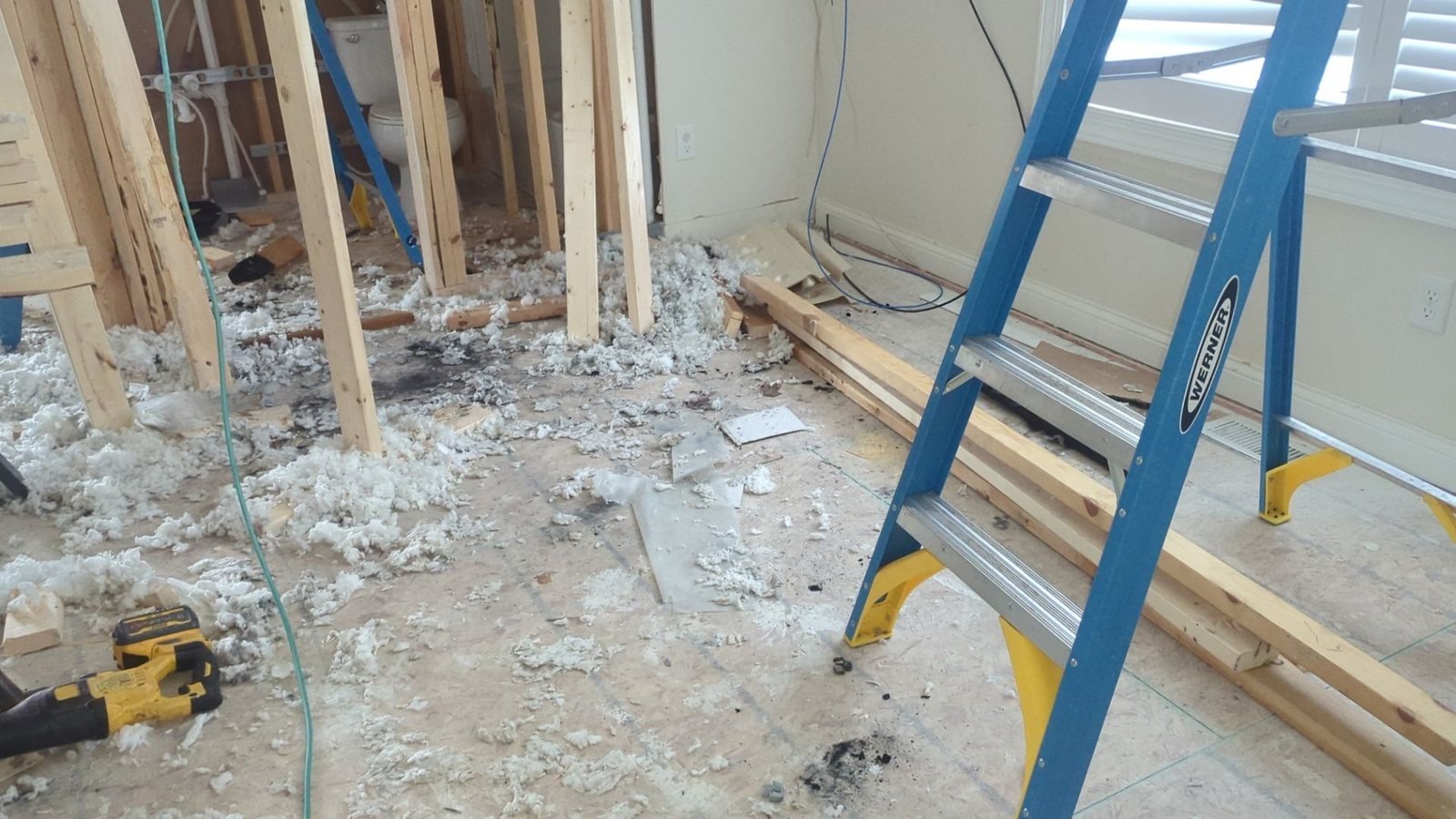
A common approach is a flood cut: drywall is cut a measured height above the water line so the cavity, plate and insulation can be inspected, dried and verified rather than sealed up wet.
Drying the cavity
When a panel stays, the cavity behind it still has to dry. That means creating airflow paths — small access holes low on the wall, behind the base trim where they will not be visible — and running dehumidification so the moisture leaving the assembly is actually removed from the room.
This is ordinary structural drying work, and the same readings decide when it is done.
What happens behind the panel
The panel is only the visible layer of a wet assembly. Behind it sit the bottom plate, the studs, the insulation and, on an exterior wall, a vapour retarder that can hold water against the framing. Batt insulation loses loft and holds moisture where it has been soaked, which is why it usually comes out even when the drywall stays. Paper facing and joint compound feed microbial growth once they have been wet and warm for long enough. Any cut is made at a stud line so the replacement has something to fasten to, and the cavity is dried and re-read before anything is closed back up.
Asked and answered
Direct answersCan water damaged drywall be saved?
Sometimes. A panel wet with clean water, caught quickly, still firm and with dry insulation behind it can usually be dried in place with directed airflow into the cavity. A panel that is swollen, soft, crumbling or sagging has lost integrity and comes out, as does any porous material that held contaminated water.
What is a flood cut?
A flood cut is a horizontal cut through drywall a measured height above the water line, typically taken to the next stud line. It opens the wall so the cavity, bottom plate and insulation can be inspected, dried and verified with a meter instead of being closed up wet.
How do you dry a wall without removing the drywall?
Small access openings are made low on the wall, usually behind the base trim where they will not show, and air is directed into the cavity while dehumidification removes the moisture leaving it. The same daily readings decide when the assembly is dry.